

About 15% of all medical claims are initially denied by private insurers. For ACA Marketplace plans, the number is even higher. That's a lot of people staring at a denial letter, not knowing what to do next.
The good news? Most denials are fixable. You just need to know why it happened and how to push back.
The four most common reasons claims get denied are administrative errors, out-of-network providers, missing prior authorization, and medical necessity disputes. Each one has a different appeal strategy — and most of them work.
Why Health Insurance Claims Get Denied: Top 4 Reasons
On average, around 15% of all medical claims are initially denied by private insurers. Surprisingly, this number increases for plans purchased on the Affordable Care Act (ACA) Marketplace.
The majority of denials stem from one of four common reasons below.
1. Administrative Errors
Typos, incorrect or missing information, and documentation are the biggest culprits here. A misspelled name or incorrect birthdate can result in an automatic denial.
Sometimes, other administrative errors are at play. It’s possible to enter the wrong billing code or not attach important supporting documentation. These errors almost always originate with your health care provider – the doctor, lab, or hospital.
On the plus side, these claim denials are usually easy for your provider to fix and resubmit.
2. Out of Network Providers
Health insurance plans have a network of providers that their clients can use. These professionals and institutions all have similar billing and administrative processes. But when you get care outside of your network, your health insurance claims are more likely to be denied.
Many plans give you an allowance for out-of-network coverage because accidents and emergencies sometimes happen. However, the amount of coverage is often smaller, and the types of procedures are much more restricted.
3. No Prior Authorization
Most insurance companies require pre-authorization for certain procedures and specialized tests.
You will run into this for many surgeries, MRIs, and CT scans. Even though the test or procedure is medically necessary, the coverage must be pre-approved. If it is not, you can appeal a denial, but there is no guarantee you will be successful.
4. Medical Necessity Disputes
When your doctor orders a course of treatment, it may be deemed as not medically necessary. Sometimes that means there could be a more conservative course of treatment available. It's also possible that your doctor didn’t include enough documentation to justify the treatment.
This can be one of the most frustrating denials to encounter. In this case, your medical team can be your biggest advocate.
What to Do if Your Health Insurance Denies Your Claim
Studies have shown that many appeals are successful. Yet, around 50% of people don’t even start an appeal. But if you do, there’s a good chance your claim will be reversed.
Here’s a 5-step process to start an appeal.
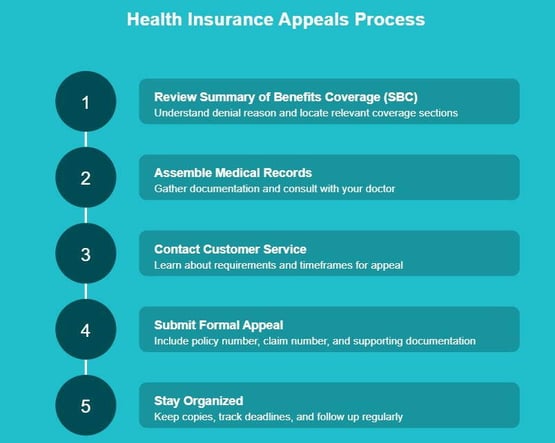
Step 1: Review your Summary of Benefit Coverage (SBC). The denial explanation will help you understand the issue. From there, you can locate the relevant sections of your SBC. This will focus your appeal on addressing the reasons causing the denial.
Step 2: Assemble your medical records. It's a good idea to talk to your doctor, as they can often resolve it for you. Your appeal package should show that your claim meets their coverage requirements.
Step 3: Talk to customer service. Most insurance companies walk you through the appeal process. They will be able to inform you about any requirements or time frames.
Step 4: Create and submit your formal appeal. You will want to include your policy number, claim number, and documentation that connects to your coverage. Make sure to keep your writing professional and factual while addressing each reason for the denial
Step 5: Stay organized. Make copies of everything you submit and track when you expect to hear back. You can also check in with customer service periodically for updates.
Why Appealing Denied Claims Is Worth Your Time
While it may feel frustrating to appeal a claim, it’s often worth it. An initial “no” isn’t always the final answer. Particularly when the claim is denied for administrative reasons, or was originally pre-authorized. In fact, appeals for pre-authorized cases are successful about 80% of the time.
Reformed Benefits Association isn’t a part of the appeals process. But members with UMR and Surest plans will find that both providers have a customer service department that helps guide you. However, we’re always available to help our members understand their benefits and get the most value out of their selected plans.
Need help understanding your church's health insurance benefits? Reformed Benefits Association members get personalized support navigating claims and appeals. Download our Benefits Guide to see how we can help.
The information contained in this blog is for educational purposes only. Please seek professional advice before acting on the information you have read above.